
Key facts
- The Franco American Festival draws residents to Kennedy Park, but Cecile Thornton never went1
- Maine banned teaching and speaking French in schools in 1919, and the law was only repealed in 19691
- Michael Grenier learned English only when he attended public school and witnessed the ridicule Franco Americans faced1
Cecile Thornton grew up in Lewiston, and the city’s annual Franco American Festival drew residents to Kennedy Park to celebrate their roots.1
Thornton never went to the festival.1
“I couldn’t understand what these people were celebrating,” Thornton said.
A city built on French
The immigrants who settled here from Quebec and Acadia in the Canadian maritimes came in search of work at the mills.1
They made the city theirs, and soon French-speaking homes and businesses lined the Androscoggin River in the area known as Little Canada.1
But Franco communities often faced discrimination.1
The community was the target of mockery for speaking French, and in 1919, Maine banned teaching and speaking the language in schools.1
The law banning teaching and speaking the language in schools was only repealed in 1969.1
The number of Mainers who identified as Franco fell precipitously over the years.1
Michael Grenier
Michael Grenier was born in Lewiston and grew up in Auburn in the 1960s.1
Grenier learned English only when he attended public school.1
“Back then, I mean, it was French French French,” Grenier said. “Some of my classmates would laugh at me and correct me.”
Grenier’s father wasn’t eager to actively preserve French in their household.1
“Even though I learned English and pretty much dropped the French, my mother was very, very proud to be French,” Grenier said.
Grenier’s mother was very proud to be French.1
Grenier is a regular attendee of Parlez-Vous, an informal French conversation group held every other week at the Franco Center on Cedar Street in Lewiston.1
The Franco Center is in the heart of Little Canada.1
Attendees at the Franco Center on a Thursday in October sat at a table.1
Attendees might use more tables when it is busier, splitting into advanced and less advanced groups.1
One attendee brought out cubes of cheese from a recent trip to Canada.1
The conversation swiftly shifted to the difficulty of pronouncing certain words.1
In French, she explained their origin and ingredients, passing them around to the group as she detailed “les herbes” (herbs) and “l’ail” (garlic).1
Attendees were happy to discuss any topic, and conversations flowed smoothly from one thing to the other.1
A complicated pride
Thornton’s memories paint a complicated picture of what it means to be Franco American nowadays — an identity which can often combine rediscovered pride with the pain of discrimination that at one time stunted it.1
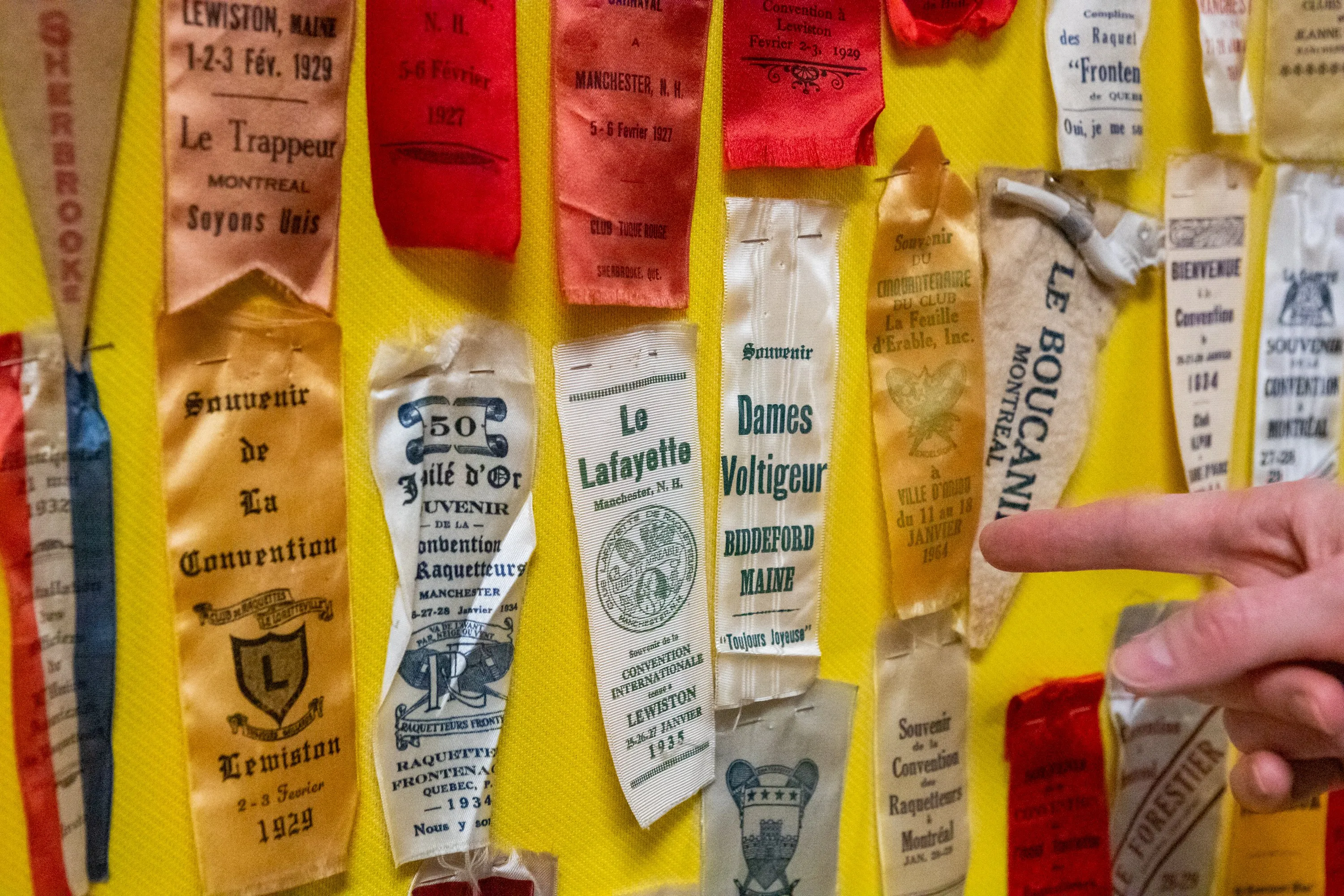
The streets of Lewiston show a city once dominated by Franco American pride, boasting storefronts with French names and prominent places in Franco American history.1
But like many Francos in the 1950s and ’60s, Thornton remembers a Lewiston where French echoed throughout the streets, and ridicule followed.1
“I couldn’t understand having pride in being Franco because from my perspective, I was still ashamed of my Franco roots,” Thornton said.
Grenier continues to hold on to his French heritage.1