
Key facts
- Lawmakers on both sides of the aisle agree that Big Tech companies need to bring their own energy sources.1
- Lawmakers on both sides of the aisle agree that Big Tech companies need to pay their fair share for power.1
- Lawmakers on both sides of the aisle agree that Big Tech companies need to use closed-loop water systems.1
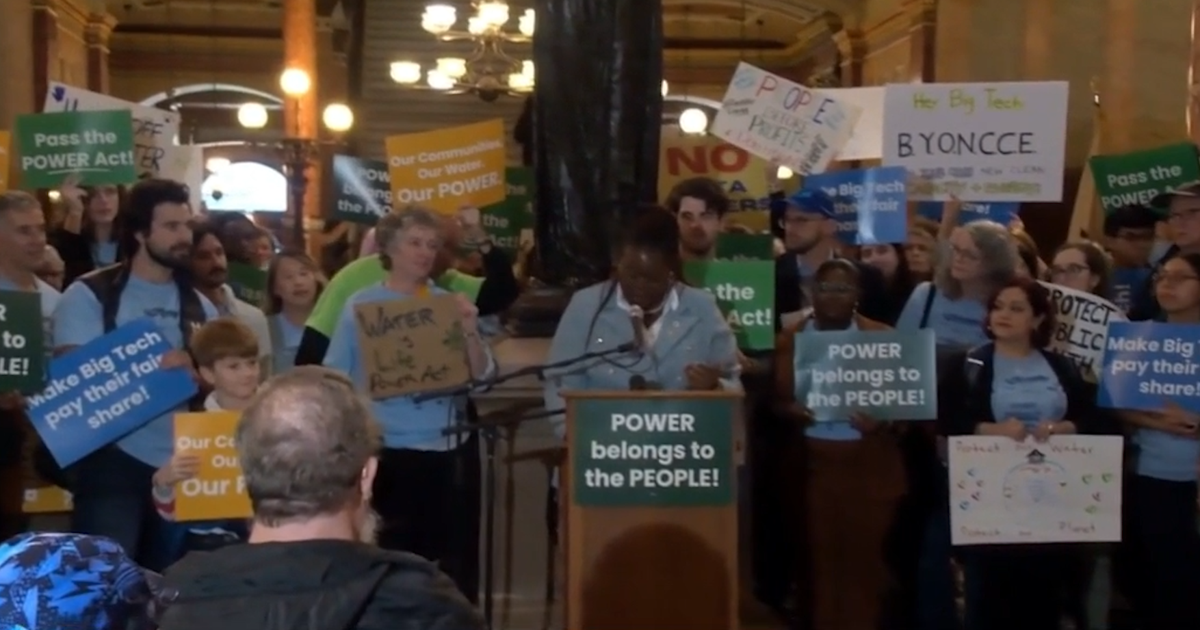
Clean energy advocates from across the state are pushing lawmakers to pass data center regulations during the second week of veto session.1
Lawmakers on both sides of the aisle agree that Big Tech companies need to bring their own energy sources, pay their fair share for power, and use closed-loop water systems.1
Advocates say the POWER Act could also establish consumer protection and pollution control policies.1
Hundreds rally at the state Capitol
Hundreds of residents and environmental advocates rallied at the state Capitol Wednesday to urge lawmakers to regulate data centers.2
The residents came via bus, car and Amtrak from around the state to call for passage of the POWER Act, a bill that would require data centers to pay to create the energy they consume, mandate transparency around water use, limit noise levels and diesel generator use, ensure local community benefit agreements, and more.2
Lori McKiernan, a local Springfield community organizer and Sierra Club member, said, “Illinoisans are tired of fighting alone for basic protections without help from the state legislature.”2
What the bill would require
The Illinois Environmental Council said the POWER Act would ban NDAs and require full access to any agreements signed.1
The bill failed to progress during the spring legislative session..2 Advocates hope to see the bill passed during the veto session.2
The Illinois Environmental Protection Agency and Illinois Power Agency released the 2026 reliability mitigation plan Monday..1 The joint report proposed extending the 2030 emission limits for gas- and oil-fired power plants under the Climate and Equitable Jobs Act to 2033.1
Lawmakers could finalize data center regulations during lameduck session in early January if they fail to pass a bill Dec. 1 to 3.1